
Executive summary. Core clinical takeaways.
Malaysian community private clinics cannot operate on a 100% appointment-only model without alienating neighborhood acute care patients who rely on immediate walk-in consultations.
A successful hybrid operational model uses calculated buffer slots and protected walk-in windows across each consulting doctor’s shift to prevent queue bottlenecks.
Front-desk friction dissolves when reception staff provide transparent wait-time expectations and triage rules between pre-booked patients and urgent walk-in visitors.
Deploying automated WhatsApp reminders and AI booking assistants gently guides repeat patients toward self-service pre-booking over time, increasing operational predictability.
Separating patient-facing booking and queue coordination from core clinical records software keeps front-desk workflows agile without requiring massive IT migrations.
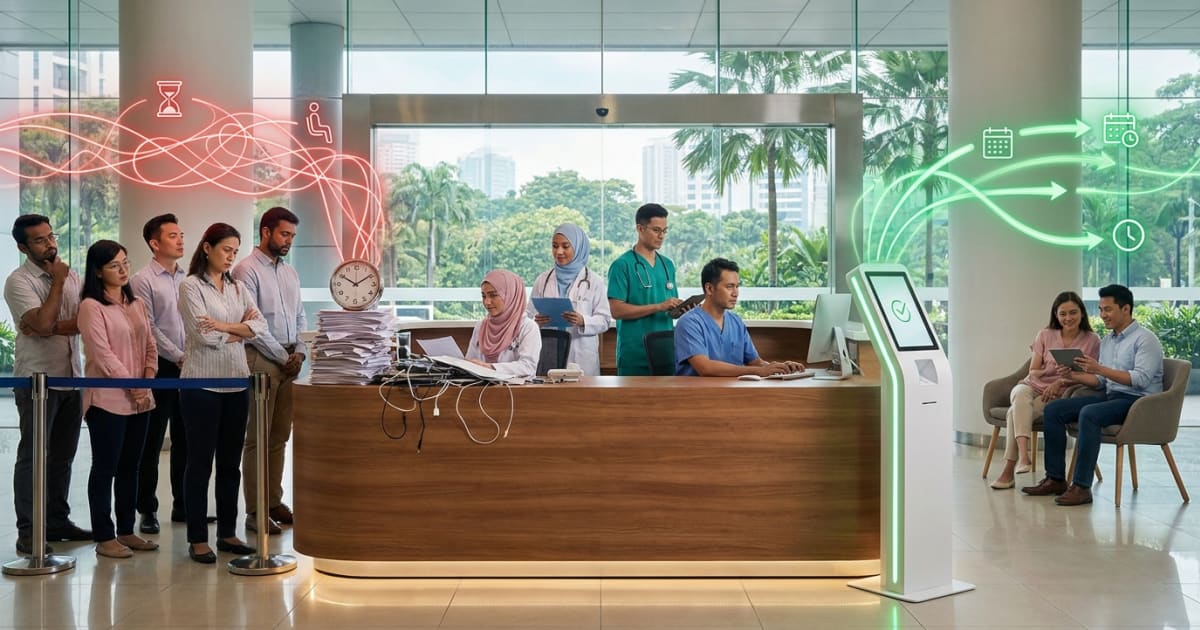
In modern Malaysian healthcare operations, few operational debates spark more debate among doctors and practice managers than the balance between scheduled visits and walk-in arrivals. Evaluating a clinic appointment vs walk in system is not about choosing one and eliminating the other. For private general practices, dental clinics, and specialist centres, the secret to calm consultation rooms lies in designing a balanced hybrid workflow that accommodates acute walk-in patients while protecting the schedule of pre-booked appointments.
Why Malaysian Clinics Cannot Be 100% Appointment-Only
While high-end aesthetic centres or specialized surgery suites can enforce strict appointment-only schedules, community clinics in Malaysia operate in a deeply relational, urgent-care environment. Demanding that every single patient book in advance often harms practice growth for several key reasons:
- Acute Neighborhood Healthcare Needs: When a child spikes a midnight fever, an elderly patient suffers sudden gastrointestinal distress, or an office worker needs treatment for acute migraine, they will not wait for an open slot two days later. They walk into their nearest neighborhood clinic immediately.
- Cultural Walk-In Habits: For decades, Malaysian private clinics have operated on a walk-in, queue-number basis. Abruptly turning away walk-in visitors damages community goodwill and sends loyal families straight to competing clinics down the street.
- No-Show Vulnerability: An appointment-only clinic that experiences even a 15% to 20% no-show rate suffers idle doctor downtime and lost hourly revenue. Walk-in patients provide the natural volume buffer that keeps consultation rooms productive when scheduled patients cancel at the last minute.
Rather than fighting community expectations, forward-thinking clinic owners adopt a hybrid approach: building structured scheduling rails that make room for scheduled visits without closing the door on walk-in patients.
Assigning Dedicated Appointment Buffer Slots Throughout the Day
The primary reason waiting rooms descend into chaos is unstructured slot allocation. When clinics try to pack 100% of their doctor's roster with pre-booked visits, a single complex case causes delays that ripple across the entire afternoon.
Through modern clinic appointment systems tailored for Malaysia and structured multi-doctor scheduling workflows, clinics implement predictable scheduling blocks:
- Wave-Based Scheduling: Divide each consultation hour into defined intervals. For example, assign two 15-minute appointment slots (e.g., at :00 and :30) and leave the remaining 30 minutes (:15–:30 and :45–:00) open for walk-in consultations and clinical notes.
- Protected Peak Walk-In Windows: Most community GP clinics experience predictable surges: early morning before work (8:00 AM – 10:00 AM) and evening after office hours (6:00 PM – 8:30 PM). Cap online booking capacity during these peak windows at 30% to accommodate the inevitable rush of acute walk-ins without creating two-hour delays.
- Dedicated Procedure & Chronic Care Blocks: Reserve mid-morning or early afternoon windows (e.g., 2:00 PM – 4:00 PM) for time-intensive procedures, ultrasound screenings, dental restorations, or chronic disease management follow-ups that can be reliably pre-booked.
This buffer framework gives consulting doctors breathing room to give complex patients the attention they need without keeping scheduled patients waiting past their appointed time.
Setting Clear Expectations for Walk-In Patients When Slots Are Booked
Patient dissatisfaction in clinic reception areas rarely stems from the wait time itself—it stems from uncertainty and perceived unfairness. When a walk-in patient who has waited 45 minutes sees a freshly arrived patient enter the consultation room immediately, resentment builds.
Proactive clinics eliminate this tension through transparent front-desk communication:
- Transparent Arrival Triage: When a walk-in registers at the counter, reception staff should provide a realistic estimated consultation time based on current booked arrivals: "Encik Tan, we have two pre-booked patients scheduled between now and 11:30 AM. Your estimated turn with Doctor is approximately 11:45 AM."
- Visual Waiting Room Signage: Clear signage explaining that the clinic honours pre-scheduled appointments alongside walk-ins sets immediate expectations and reassures patients that queue numbers are managed systematically.
- Digital Queue Status on WhatsApp: Forward-thinking practices notify walk-in patients via WhatsApp when their turn is three numbers away, allowing patients to wait comfortably in nearby cafes or their parked cars instead of crowding the waiting room.
Using WhatsApp Reminders to Encourage Habitual Pre-Booking
The most sustainable way to reduce walk-in congestion is gently shifting predictable, routine consultations from walk-ins to self-service bookings. Malaysian patients use WhatsApp daily, making it the most effective channel to cultivate pre-booking habits:
- Automated Pre-Visit Confirmations: Sending interactive WhatsApp appointment reminders 24 hours and 2 hours prior to scheduled visits secures attendance and allows patients to reschedule with a single tap if their availability changes.
- 24/7 AI-Assisted Booking: When patients need an appointment outside operating hours, an AI clinic receptionist handles their enquiry on WhatsApp instantly, checking available doctor slots and locking in the booking without human staff intervention.
- Post-Consultation Recalls: For patients requiring 3-month hypertension check-ups, dental scaling, or routine vaccinations, automated WhatsApp recall reminders include direct booking links, turning what would have been an unexpected future walk-in into a scheduled, prepared slot.
By pairing convenient WhatsApp access with reliable on-time consultations, clinics steadily increase their proportion of pre-booked appointments month after month.
The Balanced Operating Model: Calm Waiting Rooms, Higher Productivity
Balancing scheduled appointments and walk-in patients does not require complicated operational compromises. By deploying an intelligent front-desk scheduling layer like LamaniHub alongside your existing clinic management workflows, private practices achieve the best of both worlds:
- Zero Reception Panic: Front-desk staff no longer spend morning hours juggling conflicting walk-in demands and manual appointment notebooks.
- Full Consultation Capacity: Buffer intervals absorb walk-in volume during lull periods, while pre-scheduled slots guarantee steady practice throughput throughout the week.
- Elevated Patient Trust: Scheduled patients experience minimal wait times, while acute walk-ins receive clear communication and compassionate care.
To see how LamaniHub helps Malaysian GP, dental, and specialist clinics balance scheduled bookings with walk-in queues, speak with our clinic solutions team for a tailored demonstration.
Frequently asked. Clear operational answers.
Understand how LamaniHub fits into your clinic's existing phone lines, web presence, and appointment policies.
Will pre-booked appointments upset walk-in patients in our waiting room? ↓
Not when communication is proactive and transparent. Walk-in tension usually occurs when arriving patients believe the queue is strictly first-come, first-served, only to see someone else called in first. By displaying clear queue policy notices, estimating wait times upon registration, and maintaining dedicated appointment buffer intervals, patients understand the triage system and appreciate the predictability.
How many appointment slots should a GP or dental clinic open per hour? ↓
Most Malaysian GP practices succeed with a 60/40 or 70/30 ratio: reserving 3 to 4 scheduled slots per hour (such as 15-minute consultations for chronic follow-ups, minor complaints, or health screenings) while keeping 15 to 20 minutes unallocated per hour as natural buffer time for walk-in arrivals and procedure overruns.
What happens if a pre-booked patient arrives 15 minutes late? ↓
Clinics should enforce a standardized 10-to-15 minute grace window. If an appointment patient arrives past their buffer, the automated queue policy places them into the next available walk-in queue position rather than displacing on-time patients or idling doctors. WhatsApp automated reminders sent 2 hours before the visit significantly reduce late arrivals.
Does implementing this require replacing our existing clinic management or EMR system? ↓
No. LamaniHub functions specifically as the front-desk appointment booking, WhatsApp notification, and schedule coordination layer. Your clinic continues using its existing clinical records and billing software without operational disruption.
Explore the complete LamaniHub platform
Booking flow is just one pillar. Discover how our AI receptionist, calendar synchronization, and automated follow-ups unite into one clinical front desk engine.