
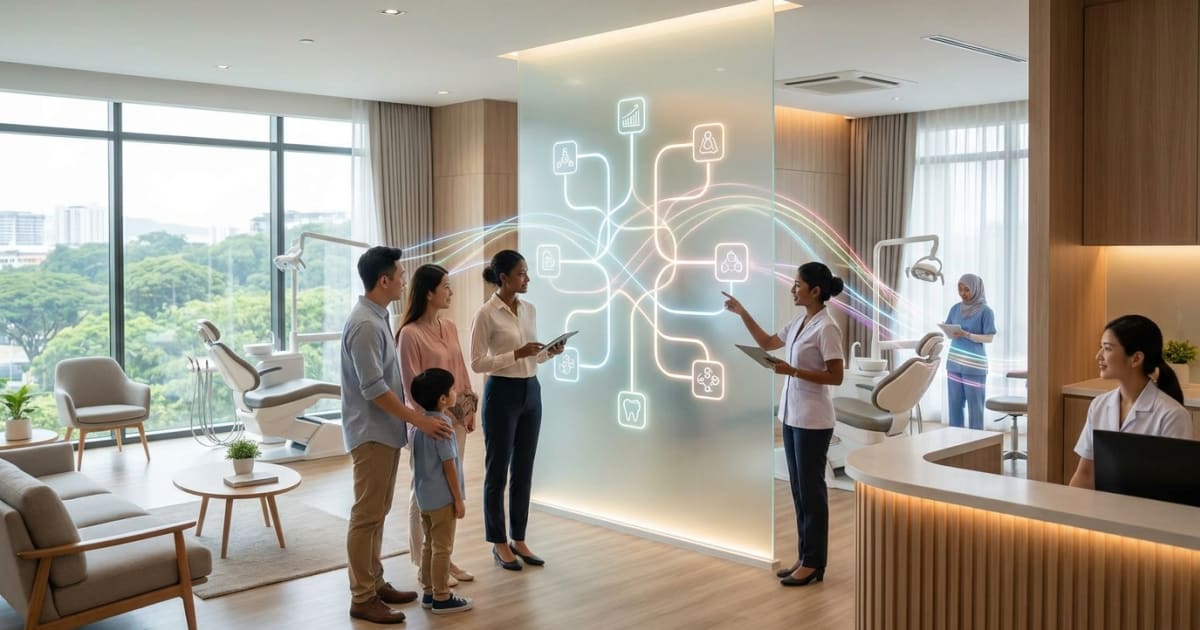
Executive summary. Core clinical takeaways.
Dental practices face steep overhead where an empty operatory chair costs RM150–RM350+ per idle hour in fixed overhead and clinical downtime.
Segmenting quick scaling and polishing appointments (20–30 mins) from complex restorative procedures (60–90 mins) prevents severe afternoon schedule bottlenecks.
Collecting automated WhatsApp confirmation and procedure deposit commitments protects high-value surgical, root canal, and crown slots from last-minute no-shows.
Multi-chair scheduling requires synchronizing both dental practitioner calendars and physical operatory suites to avoid double-booking dental assistant support or equipment.
A dedicated clinic appointment system integrates front-desk WhatsApp triage with real-time chair availability without requiring a high-friction EMR system replacement.
In private dental practice, time in the operatory chair is the primary revenue-generating asset. Between specialized dental unit costs, autoclave sterilization turnarounds, dental surgery assistant (DSA) staffing, and clinical consumable overheads, an empty dental chair represents an immediate and unrecoverable loss—often exceeding RM150 to RM350 for every hour it sits idle.
Yet across dental clinics in Kuala Lumpur, Selangor, Penang, and Johor Bahru, reception desks remain overwhelmed by ringing landlines and manual WhatsApp coordination. Receptionists juggle walk-in patients, process payment counter queues, and manually confirm tomorrow's scaling appointments, often leaving incoming patient enquiries unanswered for hours.
Deploying a tailored dental clinic appointment system in Malaysia bridges the gap between patient convenience and clinical operatory efficiency. By aligning multi-chair visibility, duration rules, and automated WhatsApp triage, dental practices can maximize chair-time productivity while delivering a frictionless patient experience.
Why Dental Clinics Struggle with Chair-Time Scheduling
Unlike general medical consultations where patient turnover is relatively uniform, dental operations involve distinct clinical variables that break standard booking grids:
Core Operational Bottlenecks in Dental Practices
- Asymmetric Durations: A routine 6-month checkup and routine scaling takes 20 to 30 minutes, whereas surgical third-molar extraction or root canal treatment requires 60 to 90 minutes. Lumping both into generic 30-minute blocks creates catastrophic calendar delays.
- Decontamination Buffers: Post-treatment disinfection, surface wipe-down, suction flushing, and instrument turnaround require a compulsory 10-minute infection control buffer before seating the next patient.
- High No-Show Impact: When a patient skips a 15-minute GP consult, the clinic absorbs a minor schedule gap. When a dental patient no-shows for a 90-minute root canal or crown prep, the primary chair sits completely unproductive while DSA staff wait idly.
- After-Hours Demand: Over 55% of dental appointment enquiries—especially for acute toothaches, chipped crowns, or weekend checkups—reach clinic WhatsApp channels after 7:00 PM when clinic doors are closed.
Scaling vs Treatment Duration Management: Protocol Design
The foundation of efficient dental scheduling is treatment-based duration assignment. Modern appointment workflows categorize procedures into distinct clinical protocols:
1. Preventative & Hygiene Tier (20–30 Minutes)
Procedures such as dental checkups, intraoral examinations, routine scaling and polishing, and topical fluoride applications follow tight 30-minute booking windows. Self-service online booking works exceptionally well for this tier because patient intent is clear, clinical risks are minimal, and scheduling parameters are standardized.
2. Restorative & Minor Surgical Tier (45–60 Minutes)
Composite restorations (fillings), simple extractions, periodontal root planing, and emergency pulpectomies require 45 to 60 minutes. The scheduling system automatically enforces a 10-minute sterilization buffer immediately following these slots to allow operatory turnover without impacting the subsequent patient.
3. Major Restorative & Endodontic Tier (60–90+ Minutes)
Crown preparations, veneer bonding, surgical wisdom tooth extractions, and multi-visit root canal treatments occupy major operatory blocks. Rather than allowing instant unvetted self-booking for these slots, the system uses an intelligent AI receptionist for clinics to capture clinical records, verify patient availability, and flag the booking for confirmation with a deposit protocol.
WhatsApp Deposit Collection for Long Procedures
Last-minute cancellations on high-value dental procedures severely impact monthly clinic turnover. When a patient confirms a 90-minute surgical appointment and cancels 30 minutes beforehand, filling that operatory slot on zero notice is virtually impossible.
Implementing automated WhatsApp deposit requests directly addresses this vulnerability:
- Automated Payment Invoicing: Once a multi-hour appointment is provisionally reserved, the platform sends a professional WhatsApp notification containing secure DuitNow QR or payment gateway links for a standard reservation deposit (e.g., RM50 to RM100).
- Time-Bound Hold Windows: The operatory chair is held temporarily for 2 to 4 hours. If the deposit is completed, the system locks the calendar and notifies the front-desk team. If unpaid within the window, the slot automatically re-opens for other patients.
- Fair Rescheduling Policies: Patients receive transparent reminder terms: deposits remain fully transferable provided rescheduling occurs at least 24 hours prior to the scheduled chair time via the automated self-service link.
Multi-Chair View for Dental Receptionists
A multi-chair dental practice cannot rely on individual doctor diaries alone. Front-desk staff must monitor two overlapping resources simultaneously: the practitioner and the physical operatory chair.
In many practices, an associate dentist may move between Operatory 1 and Operatory 2 depending on whether a patient is undergoing topical anesthesia onset, undergoing curing, or receiving ultrasonic scaling from a dental hygienist. A multi-chair calendar view provides:
- Operatory Room Tracking: Clear visual columns for Chair 1, Chair 2, Chair 3, and X-Ray / OPG suites to prevent two clinicians from booking the same physical room.
- Practitioner Allocation: Instant visibility into which dental surgeon is operating in which chair, accounting for part-time specialists (orthodontists, endodontists, periodontists) who practice on designated days.
- Walk-in Insertion Buffers: Color-coded status indicators (Booked, Arrived, In Operatory, Turnaround, Completed) enabling receptionists to slot emergency dental relief walk-ins during unexpected short treatment sessions.
Connecting with Dental Imaging and Patient Records
Dental founders frequently worry that adopting a modern booking platform means abandoning their existing clinical infrastructure. This is a common misconception.
A focused clinic appointment system in Malaysia acts as an agile front-end communication and scheduling engine. It works alongside your existing setup without interference:
- Clinical Autonomy: Your dental charting, periodontal probe records, intraoral photo storage, and digital OPG/CBCT imaging remain securely inside your clinical management or local PACS software.
- Intake Synchronization: Patient contact details, medical alert declarations, and Chief Complaint descriptions collected during online booking flow directly into front-desk view ahead of registration.
- Zero System Friction: Reception staff avoid lengthy, expensive migration projects and gain instant WhatsApp automation, 24/7 self-service bookings, and automated reminder sequences within days.
Implementing Multi-Chair Protocols: A Practical Checklist
To implement high-efficiency scheduling in your dental clinic, follow these four operational steps:
Dental Scheduling Transition Checklist
- Step 1: Audit your last 60 days of calendar data to determine exact average durations for scaling, simple fillings, root canals, and extractions.
- Step 2: Configure mandatory 10-minute operatory sterilization buffers between restorative procedures in your digital booking rules.
- Step 3: Activate automated WhatsApp reminders at 48 hours and 24 hours prior to appointment time with direct 1-click reschedule links.
- Step 4: Deploy an after-hours WhatsApp AI booking assistant to capture acute dental enquiries and weekend appointment requests overnight.
By treating operatory chair time as a scarce, valuable asset and supporting your front desk with automated booking protocols, your dental clinic can eliminate costly idle hours, streamline patient flow, and build a predictable, thriving practice.
Frequently asked. Clear operational answers.
Understand how LamaniHub fits into your clinic's existing phone lines, web presence, and appointment policies.
Can patients choose specific dentists when booking online? ↓
Yes. The appointment workflow allows patients to pick their preferred dental surgeon or select the earliest available chair. Staff can configure individual practitioner rosters, working shifts, and specific procedure capabilities per doctor.
How does the system handle unexpected treatment overruns? ↓
Dental procedures occasionally encounter anatomical complexities. The platform includes customizable buffer intervals (e.g., 10–15 minutes between deep scaling or extraction slots) and allows receptionists to send 1-click WhatsApp schedule-delay alerts to upcoming patients.
Can we collect deposits for high-value dental treatments? ↓
Yes. For lengthy procedures such as crowns, bridges, dental implants, or complex endodontics, the system can automatically send a WhatsApp payment link or payment gateway prompt before locking the reserved chair slot on the clinic calendar.
Do we need to replace our current dental imaging or charting software? ↓
No. LamaniHub operates as an agile front-desk intake, WhatsApp automation, and appointment scheduling layer. Your dental team continues using existing dental charting, intraoral imaging, and X-ray systems undisturbed.
How are patient WhatsApp data and medical records safeguarded? ↓
All patient communications, appointment records, and booking details comply with Malaysian Personal Data Protection Act (PDPA) standards. Data is stored in secure, encrypted cloud environments with role-based access controls.
Explore the complete LamaniHub platform
Booking flow is just one pillar. Discover how our AI receptionist, calendar synchronization, and automated follow-ups unite into one clinical front desk engine.