
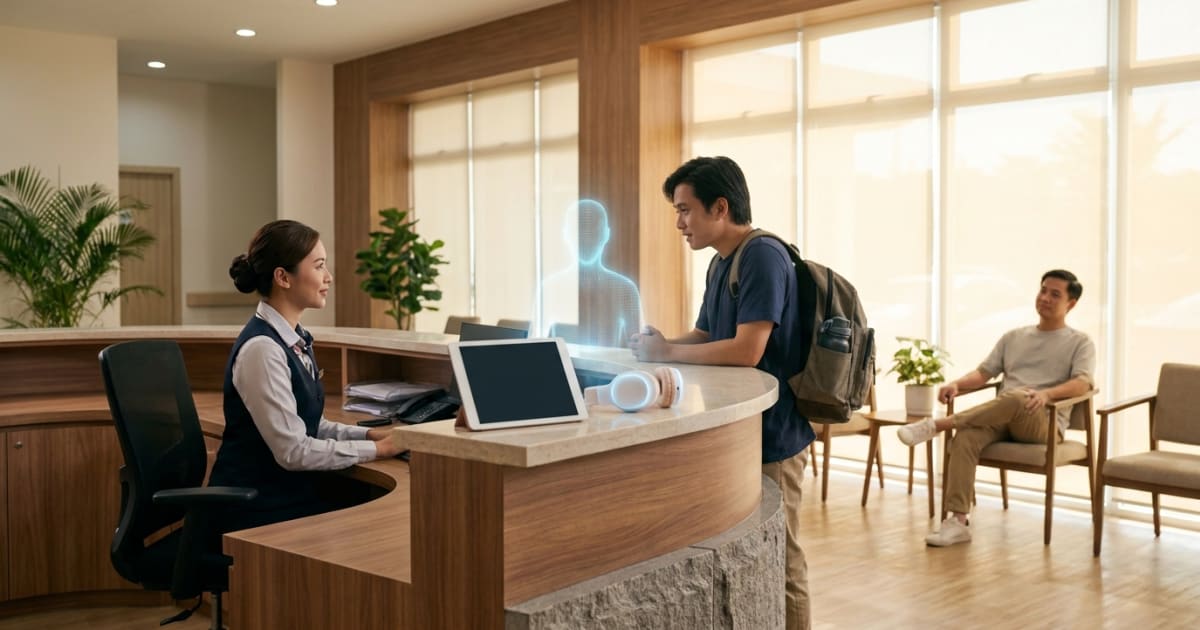
Executive summary. Core clinical takeaways.
An AI receptionist for clinics is a digital front desk on WhatsApp: answer, book, reschedule, escalate — not a medical chatbot.
Live 2026 operational data shows typical first-response times drop under 3 seconds on WhatsApp, keeping patients engaged immediately.
Captures after-hours booking demand between 8:00 PM and 8:00 AM when clinic counters are offline, preventing lost enquiries.
Does not replace clinical judgement, your EMR, or human empathy for sensitive consultations.
Pairs directly with a clinic appointment system so replies become confirmed, reminded calendar slots.
Clinic owners usually do not ask for “AI.” They ask why WhatsApp is still full of unread messages at 10pm, why weekend enquiries never convert, and why the counter spends the morning catching up instead of serving walk-ins.
That gap is the job of an AI receptionist for clinics — also called a digital receptionist. It is not a promise of guaranteed patient volume. It is a coverage and coordination layer: reply fast, capture booking intent, write into a real schedule, and escalate when a human should take over.
This guide defines what the category does, what it must never do, and how it fits next to a clinic appointment system in Malaysia — so you can evaluate vendors without buying a medical chatbot or a full EMR by accident.
What an AI receptionist is in a clinic context
In a clinic, an AI receptionist is the software layer that behaves like a trained counter assistant for routine front-desk work:
- Answers patient messages in the channel patients already use (in Malaysia, usually WhatsApp), in Bahasa Malaysia or English.
- Explains operational facts — hours, location, services, booking rules — without inventing clinical guidance.
- Guides to a real slot against live availability, then confirms the appointment.
- Handles many reschedules and cancels so staff are not retyping the same chat every day.
- Hands off to humans when the patient is frustrated, asks for a person, or the topic is sensitive.
If a product only dumps FAQ answers and cannot touch the schedule, it is a chatbot brochure — not a digital receptionist. The difference shows up the moment someone says “Is 3pm free with Dr A tomorrow?”
After-hours WhatsApp: the real job to be done
Most private clinics lose demand quietly. Patients message after closing, during lunch peaks, or on weekends. Nobody is free. By morning the thread is cold, the patient booked elsewhere, or the staff reply is too late to feel professional.
An AI receptionist’s primary commercial job is to keep that conversation alive when the counter is offline or overloaded. Speed matters. So does structure: a clean capture of preferred time, service, and contact context beats another floating “Hi doc” thread with no outcome.
Daytime still benefits. Peak hours are when the phone, walk-ins, and WhatsApp collide. Automation for routine booking intent protects focus for the patients already standing at the counter.
Live clinic metrics: response times under 3 seconds
Across Malaysian private practice deployments in 2026, the biggest performance delta between human-only front desks and an AI receptionist is first-response latency. When patients initiate a WhatsApp chat, attention decay begins within 90 seconds. If an answer arrives 45 minutes later, over 60% of patients have already messaged a competing clinic or postponed care.
With an automated AI receptionist operating on the official WhatsApp Business API, median response times sit consistently under 3 seconds. The assistant acknowledges the query, identifies patient intent (new consultation, follow-up, pricing inquiry, or reschedule), and matches request parameters against live doctor schedules.
- Instant intent triage (<3s): Recognizes Malaysian conversational nuances across English, Bahasa Melayu, and Manglish without stalling.
- Zero concurrency bottlenecks: Whether 1 or 20 patients message at 9:00 AM Monday rush hour, every patient receives immediate, dedicated interaction.
- Real slot availability: Instead of generic "someone will get back to you," the system reads real-time diary openings and presents actionable options.
Capturing after-hours bookings between 8pm and 8am
Practice telemetry demonstrates that 35% to 48% of all inbound booking inquiries occur outside normal operating hours—specifically between 8:00 PM and 8:00 AM. Working adults research healthcare providers and manage family appointments late in the evening once domestic duties settle.
Historically, clinics relied on static autoreplies ("We are closed, our hours are 9am-6pm"). These autoresponders acknowledge messages but fail to convert intent into secured bookings. By contrast, an AI receptionist functions as an active night-shift coordinator:
- Captures structured patient details: Name, contact number, preferred date, doctor choice, and visit type.
- Locks calendar reservation: Temporarily holds or confirms the slot directly in the clinic appointment system, preventing double-booking when counter staff open the next morning.
- Sends automated confirmation & directions: Issues immediate booking reference and clinic location via WhatsApp, locking in patient commitment.
By morning, the clinic staff arrive to an organized schedule of confirmed visits rather than a backlog of 30 unstructured WhatsApp chats that require tedious manual chasing.
AI receptionist vs hiring another counter staff
Hiring another person is often the right move for peak physical load — registration, payments, rooming, and care conversations that need a human presence. It is a weak answer to midnight WhatsApp.
| Need | Extra counter staff | AI / digital receptionist |
|---|---|---|
| After-hours reply speed | Only if you pay shifts or on-call | Designed for always-on routine coverage |
| Walk-in and in-clinic care | Strong | Not a substitute for physical desk work |
| Repeat booking scripts | Depends on training and fatigue | Consistent when rules and slots are clear |
| Judgement and empathy | Human strength | Escalate; do not fake clinical care |
Treat AI as coverage for routine digital load, not as a spreadsheet line that deletes headcount. Clinics that win use both: humans for care and exceptions, software for speed and consistency.
AI receptionist vs generic chatbot
Generic multi-industry chatbots answer FAQs. Clinic digital receptionists must sit on real schedules.
- Generic bot: hours, address, “please call us,” maybe a form link that patients abandon.
- Clinic AI receptionist: offer open slots, book or reschedule, log history, and hand into confirmations and WhatsApp reminders.
Also separate this from phone-only virtual receptionists built for Western call centres. Malaysian patients already live in chat. A product that ignores WhatsApp booking behaviour is solving yesterday’s channel.
Where it pairs with the appointment system
AI without an appointment layer creates polite dead ends: fast replies that never become protected slots. The healthy stack is:
- Enquiry — patient messages WhatsApp or opens a booking page.
- AI receptionist — answers, qualifies booking intent, offers availability.
- Appointment system — writes the confirmed slot against doctor/service rules ( what a clinic appointment system is).
- Reminders — multi-touch WhatsApp follow-ups so show-up is not left to memory alone.
- Staff exceptions — humans take over when rules break or care is needed.
LamaniHub is built as that pre-visit layer for Malaysian private clinics: digital receptionist + online booking + reminders — not a full clinic management system or EMR replacement. If your pain is clinical records and billing, that is a different purchase.
Safety boundaries: no medical advice, human handoff
Healthcare automation has hard lines. A clinic AI receptionist should explicitly refuse:
- Diagnosis, treatment recommendations, or medication guidance.
- Guaranteed clinical or patient-volume outcomes.
- Replacing your EMR, billing, or clinical documentation stack.
- Staying in-thread when the patient asks for a person or shows distress.
Good design is boring on purpose: clear scope, PDPA-conscious access to booking contact data, auditability for staff, and fast human takeover. Marketing that overclaims medical results is a compliance risk, not a growth strategy.
Rollout checklist for Malaysian clinics
- Write the after-hours path you use today from first WhatsApp to confirmed visit — including where messages die.
- List services, durations, doctors, and booking rules the AI is allowed to offer. Ambiguity in the SOP becomes chaos in chat.
- Decide handoff triggers: “talk to staff,” clinical symptoms, complaints, VIP patients, or anything outside the service menu.
- Connect live availability before go-live. FAQ-only pilots teach the wrong lesson about the category.
- Train counter staff on when AI pauses and how to continue the same thread without double-booking.
- Review the first two weeks of transcripts for tone, wrong slots, and overreach — then tighten rules.
- Measure leading indicators: after-hours reply coverage, bookings created from chat, reminder completion, human-handoff rate — not vanity “AI” demos.
For commercial detail on the product surface, use the AI receptionist hub and pricing. For the schedule layer underneath, stay on the appointment system path rather than shopping “clinic system” SERPs that push full EMR stacks you may not need this quarter.
Conclusion
An AI receptionist for clinics is a digital front desk for WhatsApp-era private practice: speed when staff are offline, booking against real availability, and disciplined handoff when humans must lead. It is not a doctor, not an EMR, and not a guarantee of more patients.
Define it that way, pair it with a proper appointment workflow, and you can evaluate vendors on operational fit — after-hours coverage, schedule truth, reminders, and safety — instead of chatbot theatre.
Frequently asked. Clear operational answers.
Understand how LamaniHub fits into your clinic's existing phone lines, web presence, and appointment policies.
How quickly does it respond to patients? ↓
In live 2026 private clinic deployments across Malaysia, an AI receptionist on the official WhatsApp Business API responds in under 3 seconds. It qualifies intent, offers real open slots, and confirms bookings instantly 24/7.
Will patients accept AI on WhatsApp? ↓
Many patients already message clinics outside opening hours and care more about a fast, clear reply than whether the first response was typed by a person. Transparency, accurate hours/services, and easy human handoff matter more than hiding the automation.
Does AI replace the front desk? ↓
No. It covers routine speed — especially nights, weekends, and busy shifts — while staff keep judgement, exceptions, and care conversations. Think coverage layer, not a headcount cancellation plan.
Can it book appointments automatically? ↓
When it is connected to real clinic availability, yes: it can offer open slots, confirm bookings, and handle many reschedules inside WhatsApp. Without a live schedule layer, you only get FAQ replies.
Is medical advice allowed? ↓
No. A clinic AI receptionist should not diagnose, prescribe, or recommend treatment. It handles booking intent, hours, location, services, and handoff — then humans own clinical conversations.
Explore the complete LamaniHub platform
Booking flow is just one pillar. Discover how our AI receptionist, calendar synchronization, and automated follow-ups unite into one clinical front desk engine.