
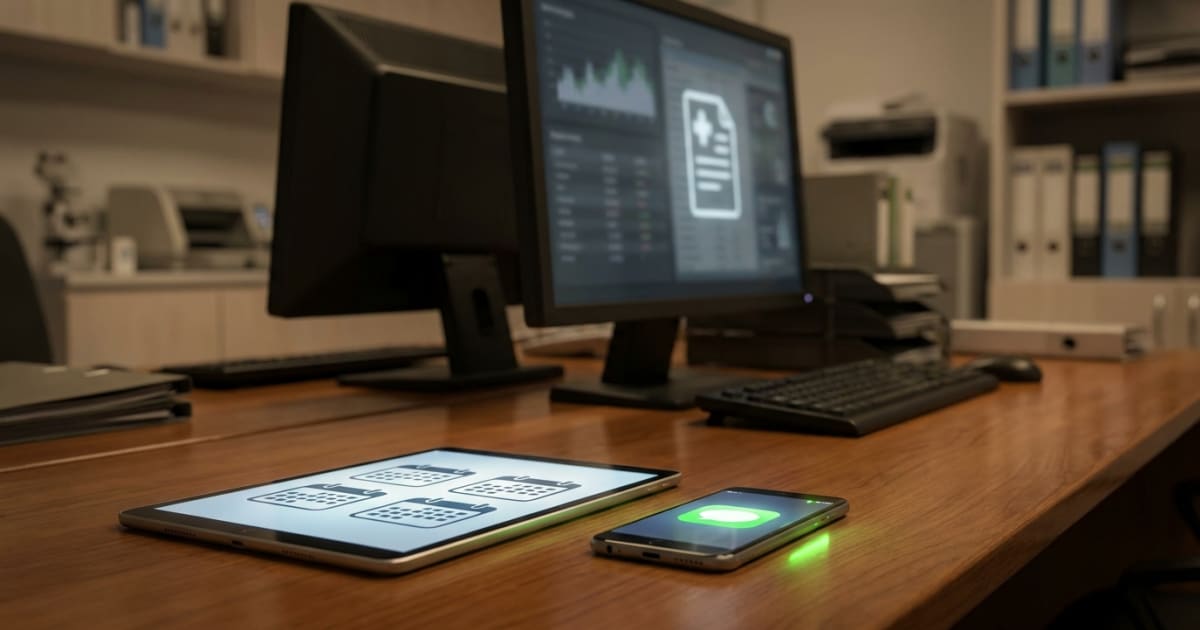
Executive summary. Core clinical takeaways.
A clinic appointment system manages booking, confirmation, reminders, and schedule coordination at flat RM269/month — not full clinical records or billing.
A clinic management system (CMS/EMR) is a broader operations stack costing RM800 to RM2,000+/month with 2–3 months of training. Many clinics do not need to replace it to fix missed WhatsApp enquiries.
Setup timeline differs sharply: an appointment and WhatsApp AI layer goes live in 15 minutes, whereas full EMR migration requires hardware changes, staff retraining, and data migration.
LamaniHub sits strictly in the appointment + WhatsApp AI receptionist layer as a companion, not an EMR replacement.
Compare tools by operational layer and financial payback: saving 5 no-shows or missed consultations monthly easily pays back the RM269 appointment layer through structured no-show reduction and timely WhatsApp reminders.
By deploying targeted WhatsApp appointment reminders alongside a proven strategy to reduce clinic no-shows, practices recover lost capacity before taking on heavy software.
Private clinics in Malaysia often feel pressure to “digitise everything” after a few busy weeks of missed calls and chat backlog. The marketplace response is usually a long list of clinic management system products. That label is broad. It can mean billing, inventory, clinical notes, multi-branch admin — or simply online booking with a heavy name.
If your main pain is getting patients into the right slot and protecting show-up, start by naming the layer you need: appointment + communication. That is different from replacing clinical records software. LamaniHub is built for the appointment layer (booking, WhatsApp AI receptionist patterns, reminders) — not as a full CMS/EMR rebrand.
Strip the CMS primary chase
Head terms like “clinic management system Malaysia” attract buyers who want a full operations suite. That SERP is crowded with EMR/CMS products and agency-style software. Chasing it as a primary product story pulls the wrong buyer into the wrong evaluation.
Use CMS language only for boundary and comparison: what an appointment system is, what it is not, and when a full stack is actually required. Do not rebrand an appointment product as “the clinic system.” That confuses searchers and creates compliance risk if clinical features are implied but not delivered.
Practical filter for clinic owners:
- Communication pain (WhatsApp, after-hours, slow reply) → appointment + AI receptionist layer.
- Schedule pain (double books, no confirmation trail, weak reminders) → appointment system.
- Clinical records / multi-module ops pain → evaluate CMS/EMR with clinical stakeholders, not marketing alone.
Clarify LamaniHub = appointment layer only
LamaniHub is a clinic appointment system with WhatsApp-led workflows and AI receptionist patterns for Malaysian private clinics. The job-to-be-done is simple: turn enquiries into confirmed appointments, send reminders, and reduce front-desk chaos — without forcing a full software replacement on day one.
What that typically includes in product terms:
- Online booking paths patients can complete without staff ping-pong.
- WhatsApp as a familiar entry channel, with structured confirmation behind it.
- Reminder workflows that support show-up (results vary by clinic process).
- Clearer schedule visibility for the team handling the front desk.
What that does not mean: full electronic medical records, pharmacy modules, insurance claims engines, or “one system for every clinic department.” Those belong to CMS/EMR vendors. Keep the story honest so buyers compare the right tools.
For feature detail, see the features overview and online booking. For category positioning on AI front desk, see AI receptionist for clinics.
Soften EMR language (and avoid overclaim)
EMR and clinical software decisions need clinical leadership, data governance, and often longer procurement. Marketing pages should not promise clinical outcomes, guaranteed patient volume, or “replace your doctor software overnight.” Keep claims operational and soft: fewer missed enquiries, clearer booking status, more consistent reminders — always dependent on how the clinic runs the process.
If you already have a CMS/EMR, ask a narrower question: Does our current stack still leave WhatsApp and after-hours booking messy? Many clinics answer yes. In that case, an appointment layer can sit in front of patient communication without a full stack swap. Validate any integration or data-handling needs with your vendors and PDPA policies before you connect systems.
Side-by-side: appointment system vs clinic management system
| Layer | Clinic appointment system (e.g., LamaniHub) | Clinic management system / EMR (e.g., Heavy EMRs) |
|---|---|---|
| Primary job | Book, confirm, remind, 24/7 WhatsApp AI receptionist | Clinical records, prescription, billing, drug inventory |
| Typical monthly cost | Flat RM269/month (all doctor seats included) | RM800 – RM2,000+/month (often per-doctor licensing) |
| Setup timeline | 15 minutes self-serve (calendar + WhatsApp connect) | 2 to 3 months (data migration, hardware, staff training) |
| Typical buyer pain | Missed WhatsApp, after-hours enquiries, no-shows | MOH regulatory notes, inventory loss, complex POS billing |
| Time-to-value focus | Immediate front desk relief & recovered consultations | Organisation-wide operational transformation |
| LamaniHub position | Dedicated companion layer (appointment + WA AI) | Out of primary scope (complements, does not replace) |
Cost comparison: RM269/mo vs RM800–RM2,000/mo full EMR licenses
When clinic founders compare software costs, comparing an appointment system to a clinic management system directly is an apples-to-oranges mistake.
A full clinic management system (CMS/EMR) licenses an entire back-office infrastructure. In Malaysia, enterprise EMR solutions typically charge between RM800 and RM2,000+ per month. Many charge additional per-practitioner fees (e.g., RM150–RM300 per doctor seat), mandatory onboarding fees (RM1,500–RM5,000 one-off), and recurring fees for SMS or WhatsApp notification bundles. For an established multi-doctor clinic, this software overhead is justified because it governs pharmacy dispensing, inventory control, and MOH compliance.
In contrast, a dedicated clinic appointment system like LamaniHub operates on a flat RM269/month model. There are no per-doctor seat penalties, no setup fees, and no per-branch lock-ins. The financial equation is simple:
- Breakeven math: In a typical Malaysian GP, dental, or specialist clinic where a single consultation or procedure ticket averages RM60 to RM150, recovering just 2 to 5 missed appointments or after-hours WhatsApp bookings per month completely covers the RM269 software investment.
- Zero replacement friction: You do not need to discard your existing billing or clinical notes system to stop losing patients after 6:00 PM.
Setup timeline: 15 minutes vs 3 months of staff training
The hidden cost of clinic software is rarely the subscription invoice; it is the operational disruption to front-desk staff and clinicians.
Deploying a full clinic management system requires:
- Migrating years of historical patient databases and drug formularies.
- Hardware installation: barcode scanners, label printers, and local networked terminals.
- Weeks of staff retraining, doctor resistance, and slower consultation turnaround during the transition.
- Average time from contract signing to full operational go-live: 60 to 90 days.
In contrast, a dedicated appointment and WhatsApp layer takes 15 minutes to set up:
- Configure doctor consultation hours, buffer times, and available appointment types.
- Connect your clinic WhatsApp channel to activate the 24/7 AI receptionist.
- Place the verified booking link on your Google Business Profile, Instagram bio, and website.
Your nurses and front-desk team do not have to abandon their daily routine. When patients book online or via WhatsApp, confirmed appointments populate directly onto the clinic calendar with automatic reminders sent 24 hours and 2 hours prior to the slot.
How to decide without buying the wrong stack
- List the top three operational pains this month (not a vendor feature checklist).
- Map each pain to communication, appointment, or clinical-records layers.
- Pilot the thinnest layer that removes the biggest daily load.
- Keep clinical software changes on a separate timeline with proper review.
If appointment chaos is the bottleneck, start with a focused appointment system and WhatsApp workflows. Compare that path with generic booking software when you need clinic-specific scheduling behaviour — not a vague “clinic system” label.
Bottom line
A clinic appointment system and a clinic management system are not interchangeable. Use CMS/EMR language for boundary education only. Keep LamaniHub’s story on appointment booking, WhatsApp AI receptionist workflows, and reminders for Malaysian private clinics — without medical advice, without guaranteed patient volume, and without pretending to be full clinic management software.
Frequently asked. Clear operational answers.
Understand how LamaniHub fits into your clinic's existing phone lines, web presence, and appointment policies.
Which one should a new clinic choose first? ↓
If you are launching a new clinic, determine your biggest operational risk on day one. If your primary worry is patient acquisition, booking slots, and answering after-hours WhatsApp queries, start with an appointment and WhatsApp receptionist layer like LamaniHub (RM269/month) which goes live in 15 minutes. If your clinical documentation, prescription printing, and MOH regulatory records require digital storage from day one, pair it with an established Malaysian EMR, or add the heavy CMS later once patient volume justifies the software overhead.
Do we need a full CMS to start digital booking? ↓
Usually no. Many Malaysian private clinics can improve confirmations, reminders, and after-hours WhatsApp handling with an appointment layer while keeping their current clinical records process. A full CMS/EMR replacement is a separate project with different risk and cost.
Is LamaniHub a clinic management system or EMR? ↓
No. LamaniHub is built for appointment booking, WhatsApp AI receptionist workflows, reminders, and schedule coordination. It is not positioned as a full clinic management system, electronic medical record, or billing suite.
When should a clinic consider a full CMS instead of an appointment system? ↓
When the main gaps are clinical documentation, multi-module operations, inventory, or deep billing — not primarily missed enquiries and schedule chaos. If the pain is WhatsApp backlog, after-hours messages, and show-up rate, start with the appointment and messaging layer first.
Can appointment software work alongside existing clinic software? ↓
In many clinics, yes. The appointment layer handles booking and patient communication workflows; clinical systems handle records and other back-office modules. Always validate integration needs with your vendors before changing anything clinical.
What should we compare when evaluating tools? ↓
Separate three layers: (1) patient communication and WhatsApp, (2) appointment confirmation and reminders, (3) clinical records / full CMS. Buying a heavy CMS to solve after-hours WhatsApp alone is often the wrong first move.
Explore the complete LamaniHub platform
Booking flow is just one pillar. Discover how our AI receptionist, calendar synchronization, and automated follow-ups unite into one clinical front desk engine.
- Clinic Appointment System (LamaniHub) →
- Clinic appointment system Malaysia →
- LamaniHub pricing and ROI calculator →
- Reduce clinic no-shows playbook →
- WhatsApp appointment reminders →
- AI receptionist for clinics →
- What is a clinic appointment system? →
- Clinic appointment layer vs EMR software →
- Clinic booking cost vs manual coordination →
- Digital receptionist explained →
- Online booking for clinics →
- LamaniHub features overview →
- Talk to the LamaniHub team →